In an industry where business owners contend with widely swinging input costs, demand sensitivity and labor challenges, artificial intelligence is no longer just for the larger chain businesses.
Local business owners are using accessible and affordable tools to decrease risk, improve profits and create better customer experiences.
Who is using it and what are they using it for?
Point of sale technology provider Toast completed a survey in November 2025 and found that most of the 712 respondents interviewed were comfortable using AI (86%), plan to use it more in the future (81%), believe it will help them become more profitable (81%) and trust the technology to help them achieve their goals (79%).
These are very strong results for a technology new to most small- to medium-sized business owners, but they also show that enthusiasm outpaces adoption.
For example, less than 30% of respondents admitted to using AI tools to help them with marketing and guest engagement, real-time insights, menu optimization, customer assistant tools, guest and location analytics, drive-thru and phone automation, forecasting and demand planning, and competitive benchmarking and market intelligence.
A higher percentage of respondents said they are “extremely likely to adopt” this new technology, but still under 50%.
We interviewed Houston Oldham with Oldham Hospitality and Lindsay Elsten with Daisy’s Non-Alcoholic Bar and Bottle Shop.
Oldham Hospitality’s experience with AI
The leadership team at Oldham Hospitality didn’t begin with the list of restaurant-specific tasks that AI can help with, but they did add applications over time.
“We operate on nine or 10 different brands on any given day,” Oldham explained. “And so we were having conversations at daily, weekly, monthly and were basically committing everything to memory.”
So the first AI tool the leadership team adopted to help manage Dancing Bear Lodge and Appalachian Bistro, Peaceful Side Social, Apple Valley Cafe, Peaceful Side Brewery and the Dancing Bean was Firefly Note Taker, an AI-powered note-taking technology that records and summarizes meetings.
“If I’m having a meeting with one of our general managers, I’ll pull my phone out and record it,” Oldham explained. “Realistically, what it’s for is just to create a to-do list off of the meeting to make sure we’re on the same page and heard the same things.”
He admitted the technology works, but the hardest part is remembering to use it.
It didn’t take long before the company began integrating other tools to help them with scheduling and inventory.
Scheduling for the Oldhams is not one of their biggest challenges, Oldham admitted, mainly because they are committed to assuring employees have consistent schedules so they can plan their lives. But a software tool called Homebase does help them manage schedules.
“Homebase is really just a scheduling app,” he explained. “It allows you to optimize schedules based on expected revenue for the week.” The application boasts AI-powered scheduling at the $56 a month price point, according to their website, which includes the ability to build schedules based on team members’ availability, work history and time-off data.
But inventory tracking is where the organization began finding real benefits.
“We use Devsite, which is an inventory accounting system for our bars and our restaurants,” Oldham said.
Devsite inventory tracking involves using specialized software or custom-built tools to monitor stock levels, locations and movements in real time. Oldham uses this system to automatically create tracking lists and decrease the amount of work the accounting team must do every month by uploading invoices to the application.
“Eighty percent of the time, we are able to just take a picture of the invoice or upload a digital copy of it and all the items on it turn into usable inventory items in our system.”
Before implementing this system, a full-time data entry employee was tasked to do this work.
“The cost to the business is probably not super material — maybe $20,000 a year in savings — but it’s still something,” he said.
The problem they are most hopeful about AI providing a solution for is waste management.
“In the past year, we’ve been able to create advanced waste logs,” Oldham said. “Waste logs are exactly what they sound like — tracking all the stuff that goes bad.”
The team inputs data into their models and is able to analyze trends and identify actions that will decrease loss and waste.
But so far they only have one year of data to work with, and in a seasonal tourism-based business, there isn’t enough data yet to make significant changes to the bottom line, he admitted.
Finally, Oldham Hospitality uses various AI tools integrated with QuickBooks to help identify where there are margin problems and adjust their supply chain accordingly.
Oldham also used ChatGPT to help the team validate a 30-, 60-, 90- and 120-day marketing plan.
But he has reservations about using these artificial intelligence tools.
“I particularly don’t like ChatGPT because I think it’s full of confirmation bias,” he said. “If you ask it to tell you something bad about your business, it will. And if you ask it to tell you something good, it’ll say you’re God’s gift to Earth.”
Ultimately, Oldham believes business owners of all sizes should embrace artificial intelligence.
“If you’re not running your financial statements through (AI) to look for a trend analysis on both where you’re doing really well and where you are potentially having margin compression, then you’re leaving money on the table,” he concluded.
Oldham, however, leads a large company with multiple brands in multiple cities with a deep well of resources from which to draw.
Can smaller business owners find ways to improve their businesses using AI?
Elsten’s experience with AI
Elsten opened a downtown Maryville venue last fall that serves handcrafted mocktails and functional beverages alongside zero-proof spirits, non-alcoholic beers and wines and organizes events that draw crowds.
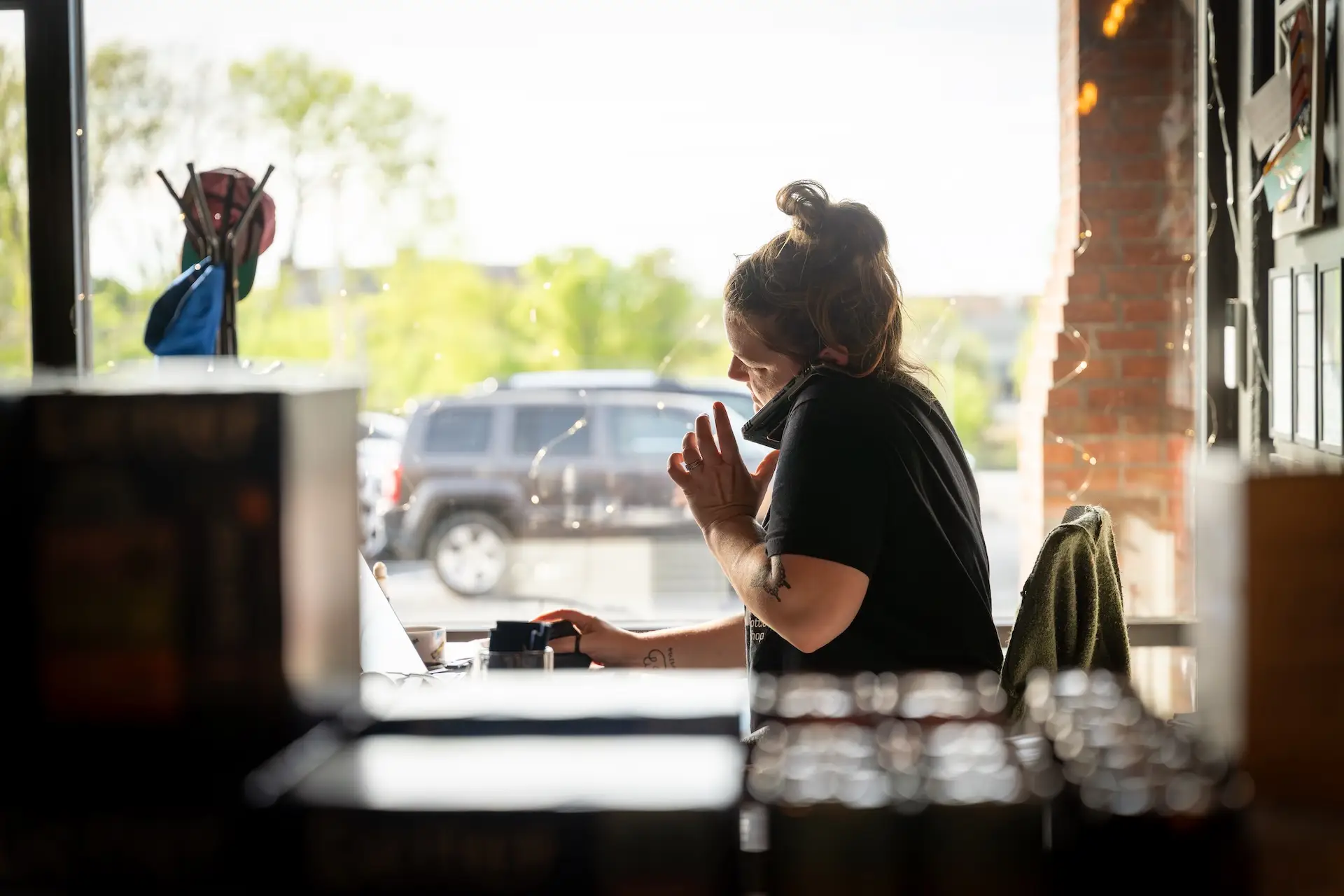
At Daisy’s Non-Alcoholic Bar & Bottle Shop, Elsten has leaned into AI’s ability to help her with developing her business plan, monitoring profitability and marketing her new business.
The University of Tennessee, Knoxville, business graduate was inspired by her own journey in sobriety trying to find a place to connect with others that didn’t include the pressures of alcohol.
Elsten said AI is making it easier for her to be a part-time entrepreneur.
“What is our best-selling drink? I don’t have to go through rows and rows of data to figure that out anymore,” Elsten explained. “The Toast point-of-sale system has integrated their own AI where I can just ask that question and it pulls up the data that I need for that.”
The monthly $69 point-of-sale package, according to their website, automatically includes AI tools instead of forcing users to pay for additional add-on features.
This additional functionality helps her understand what drinks to promote on social media and create trend analysis for future offering development, she said.
But the most meaningful way she uses AI is to track profit margins.
“Profit margins, especially from our food side, are challenging,” she explained. “It’s one thing to be able to say, OK, this liquor has so many servings in it, this is the price per serving, this is what we’re selling the drink for. And then it’s another thing to say, OK, here’s all of the pieces of a dish and what each of those cost.”
Having a deeper understanding of input costs, she said, allows her to calculate her price point and profit much more confidently. Implementing these tools hasn’t been difficult, primarily because most of the software she uses regularly has AI built into it already.
“I use Gemini a lot because it’s integrated with all of my devices and it already has the background knowledge of what Daisy’s is,” Elsten explained. “So when I ask a question about my business, I don’t have to re-explain that we’re a non-alcoholic bar and bottle shop. It builds upon all of the conversations we’ve had.”
And that’s where she said she found most of the value in using AI: business plan development.
AI chat applications, she said, have been useful for asking open-ended questions about the industry in general and then drilling down to find additional questions she should ask about her business.
How well does she feel she’s using AI to help build her business?
“I think I’m able to integrate it in my day-to-day in a way that feels authentic, at least to me. I hope it still feels authentic to everybody else,” she said.
Elsten admits to being hesitant about fully handing off tasks to AI, though.
“I still have this hesitancy of letting it just do things, you know? I feel like there’s some other ways that it could be integrated. It’s just the time it takes to verify what it says and make sure that everything that it’s spitting out is accurate. I still want that kind of control.”