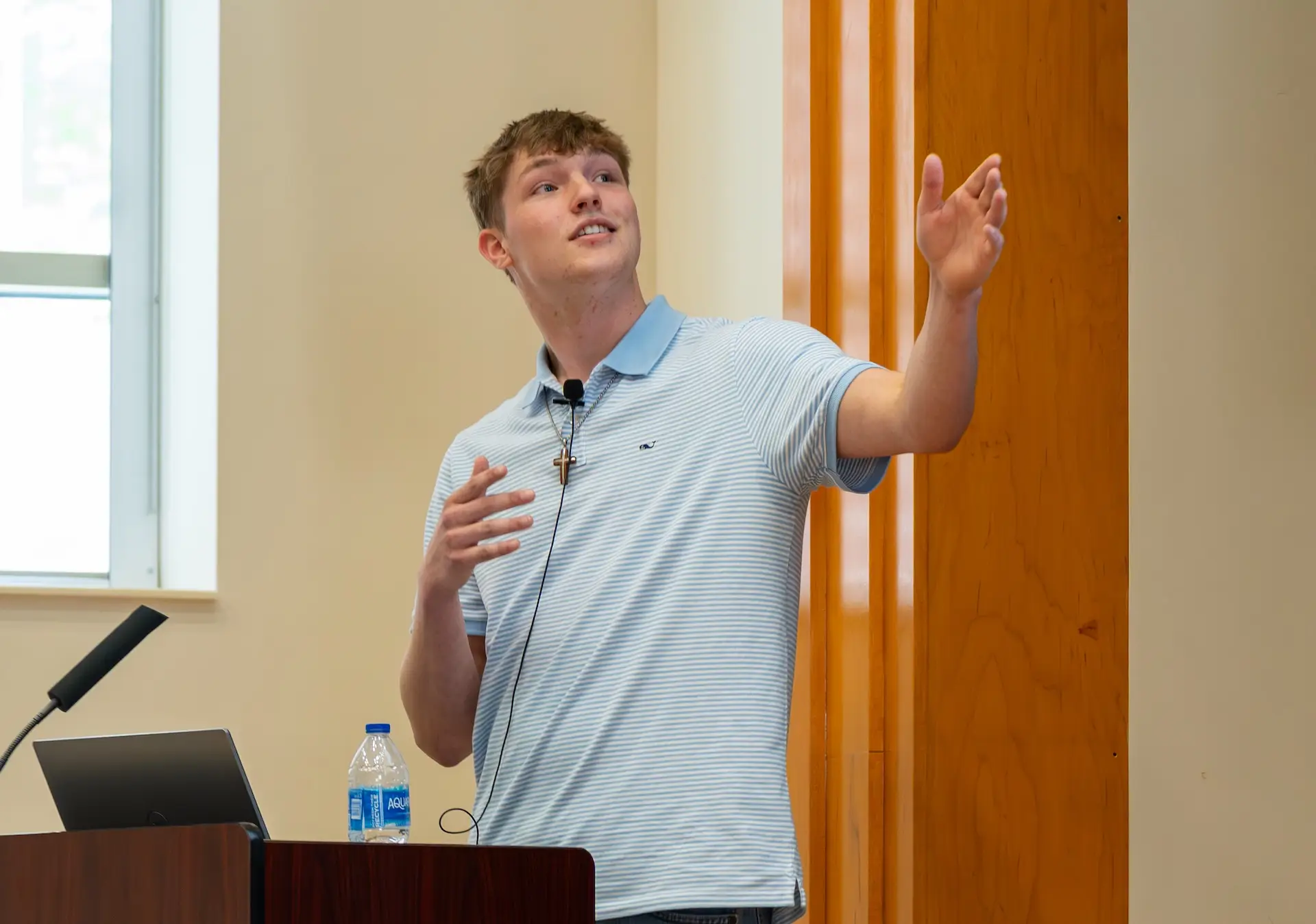
 Kaitlyn Brantley already knew the business worked. She had been doing it for three years. What she needed was a plan to grow it — and on May 7, she pitched that plan to a panel of judges, won first place, and walked away with a $3,000 check.
Brantley’s company, Kaitlyn’s Kuddles, a pet and child care service, topped a field of 18 competitors at Pellissippi State Community College’s annual entrepreneur pitch competition, held at the West Chevrolet Auditorium on the school’s Blount County Campus. Evan Workman took second place and $2,000 for Evan’s Pies, a pizza restaurant concept, and Nyla Reve Carlton earned third place and $1,000 for Styled by Reve, a beauty and wellness business.
The competition is part of Pellissippi’s partnership with the National Association of Community College Entrepreneurship and represents the capstone of the school’s entrepreneurship concentration within its Associate of Applied Science in Business degree.
 “There was not a bad presentation,” said Mark Fuentes, interim dean of the School of Business, who helped develop the entrepreneurship curriculum beginning around 2018. “Every single time we do this, they get a little bit better, and we integrate some different things into our curriculum.”
This year’s field of 18 was a dramatic jump from last year’s six competitors and five the year before. Fuentes said enrollment in the introductory entrepreneurship course started with just three or four students. This year, the program has grown to 20.
Gregg Bostick, director of the Tennessee Small Business Development Center at Pellissippi State, announced the winners and offered the competitors some blunt advice before the winners were announced.
“Know your numbers,” Bostick told the room. “What are your margins? Where is your break even? What is your cost of goods sold? Know your numbers so it’s a profitable business and not an expensive hobby.”

In a post-competition interview, Bostick said the three winners stood apart because they identified a real problem and presented a credible solution. Of Brantley, he said simply: “She’s already in business for three years. She’s not only identifying problems, she’s already solving that problem.”
Workman’s pizza concept earned praise for its financial rigor. Bostick noted that Workman understood his startup costs — in the $680,000-$700,000 range — and grasped the economics of the restaurant business from the inside out.
“It’s one thing to want to run a restaurant,” Bostick said. “It’s another thing to know how to run a restaurant.”
Heetesh Patel, president of Neves Investments in Knoxville and a judge for the third consecutive year, said the panel evaluated each pitch by asking a simple question: would we put our own money into this?
“We felt confident in the person that was leading it, and we felt confident in the business model,” Patel said. “In all three cases, both of those were true.”
Patel said the most important thing a student could do was be genuine. The worst? “Use AI for their entire presentation.”
For the winners, the experience was as much about overcoming self-doubt as it was about business planning.

“Public speaking is honestly not my strong suit,” Brantley said after accepting her check. “But I think because I’m passionate about caretaking, that obviously shines through.”
Workman, who plans to open in the Broadway or downtown Knoxville area to capture the college crowd, rated himself an eight out of 10 on the likelihood of actually launching — and left open the possibility of starting with a food truck.
Carlton said her nerves evaporated once she reached the podium.
“I know my stuff, so why am I scared?” she said. “The judges were so easy to talk to.”
Fuentes said the program’s long-term vision includes an entrepreneurship center with dedicated space for workshops and community outreach — resources available to aspiring business owners beyond the degree program. He said the school is also exploring a standalone Associate of Applied Science in Entrepreneurship.
Bostick, whose TSBDC office is housed on Pellissippi’s campus and helps clients access capital funding, said the implications of events like this extend well beyond the auditorium.

“Main Street business is still the backbone of the American economy,” he said. “Look at the businesses that have banners at Maryville High School, Alcoa High School, William Blount, and Heritage. It’s the local businesses that build the community.”
Amy Lowry, the instructor who taught 16 of the 18 competitors in the entrepreneurship capstone course, said she deliberately withheld feedback on their final presentations until the night before the competition.
“I told them: you’ve gotten that throughout the semester. You’re going to do this on your own,” Lowry said. “I could not have been prouder of the level they took it to today.”