Local governments across Blount County are preparing to spend millions of dollars on a highway that may not open for another decade.
Supporters say the investment is about more than building the Pellissippi Parkway Extension. Together with the ongoing Alcoa Highway relocation project, they argue the construction will shape where the county grows, improve access for businesses, make the transportation network safer and avoid paying even more to preserve the corridor after development arrives.
Opponents see a different calculation. They argue the money should be spent relieving today’s traffic problems rather than preserving land for tomorrow’s growth, warning the projects could encourage development that permanently changes the county’s rural character.
At stake is more than two roads. The decisions local governments make today could influence where businesses invest, which commercial corridors gain or lose traffic and how Blount County grows for decades to come.

What’s being built?
The Alcoa Highway relocation and Pellissippi Parkway Extension are being promoted as safety and traffic projects, but their larger business impact lies in growth management. They’ll move regional traffic onto controlled-access highways, changing how customers reach existing commercial corridors and requiring local governments to spend money now to secure road capacity.
The projects themselves are different — but linked.
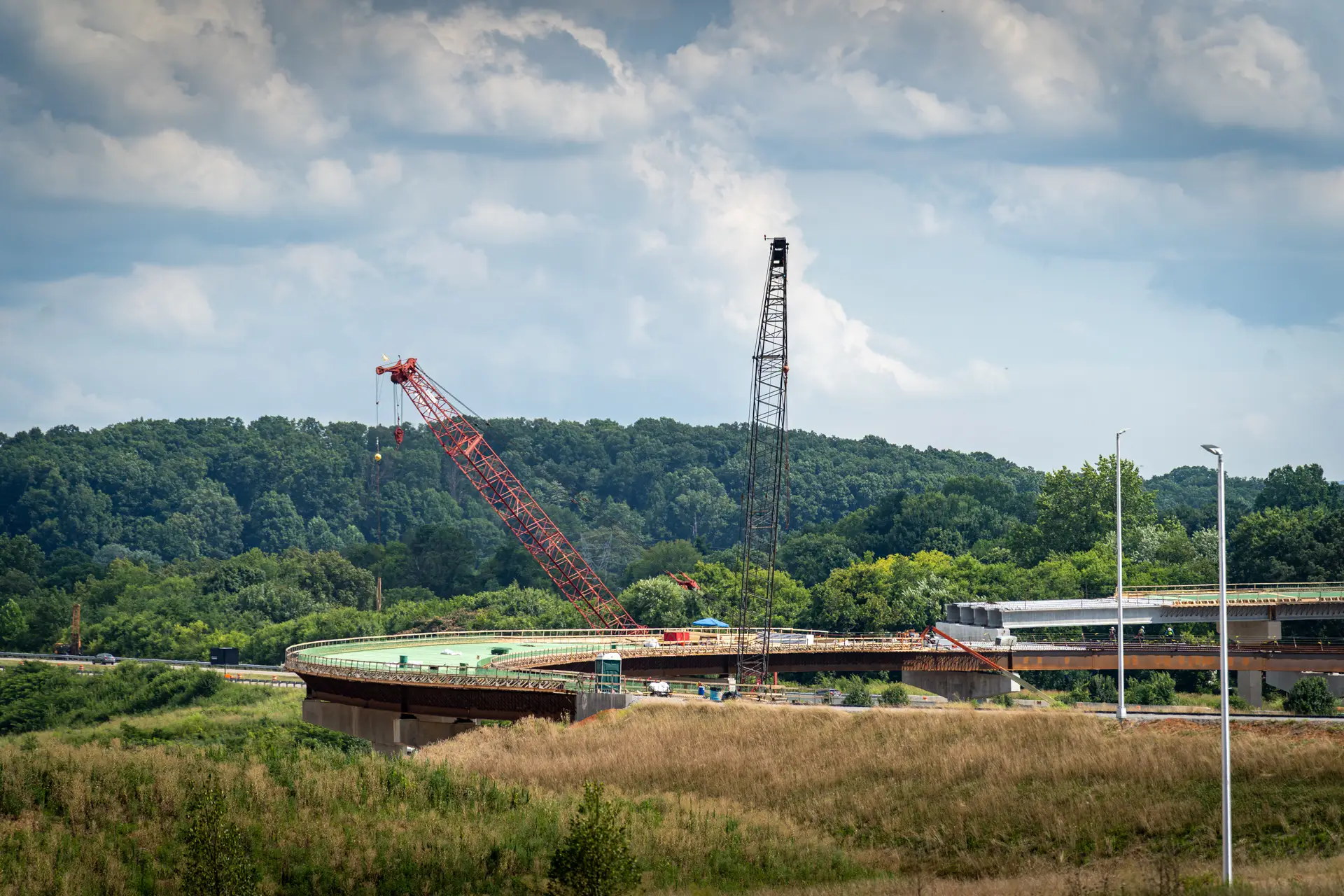
On Alcoa Highway, the Tennessee Department of Transportation plans to shift most through traffic onto a new limited-access highway east of the existing corridor while leaving the current road in place for local access. The goal is to separate regional traffic from local business traffic, potentially changing how customers reach the Motor Mile and other commercial areas while easing congestion along one of Blount County’s busiest corridors.
The relocation is expected to cost more than $100 million and is scheduled for completion in phases through 2028.
The Pellissippi Parkway Extension would add a little under 5 miles of new, four-lane highway from Old Knoxville Highway to Lamar Alexander Parkway. Supporters argue it will relieve pressure on existing roads and prepare the county for future growth, while opponents contend it will encourage new development and reshape where that growth occurs.
The project is expected to cost more than $350 million – but TDOT has asked local governments to provide over $10 million in funding for right of way acquisitions.

Is growth stoppable?
If you ask Blount County Mayor Ed Mitchell, he’ll tell you there’s no gate that magically stops growth. Regional growth is here to stay, he said, and it’s already putting pressure on the county’s infrastructure.
On Sam Houston School Road, for example – a connecting road that would feed toward the Pellissippi Parkway Extension – traffic has risen 54% in the last ten years, according to data recorded by TDOT.
On Pellissippi Parkway itself, the growth rate is even higher. On the stretch between Alcoa Highway and Cusick Road, average annual daily traffic numbers have risen 79% since 2016.
Part of the government’s job is to accommodate that growth as best it can, Mitchell said.
“We didn’t necessarily want to have that road in our life anyway, when we were growing up, but guess what? We realize now we have to have it if we’re going to continue to succeed,” he said.
Mitchell views the parkway extension as the lesser of two evils. The county can put its $5 million share toward a federally funded highway that takes strain off local roads, or it can expand capacity at dozens of minor roads already backing up with traffic every morning.
Expanding the existing network of local roads instead of building the parkway was projected to cost $350 million in 2016, Blount County Finance Director Brian Baldwin said.
Maryville City Manager Greg McClain said that’s the kind of long-term tradeoff local governments are expected to make.
Roads do not create growth, he said. Roads try to organize growth already underway.
When it comes to Pellissippi Parkway, he said it’s best to think about the long game.
“You’re not designing it for today,” he said. “You’re designing it for the next 40, 50 or 60 years.”

How will this impact business?
Actual business forecasts for the projects are either outdated or uncertain. An economic report from TDOT, for example, predicted the Pellissippi Parkway Extension could induce anywhere from 33,000 to 60,000 square feet of commercial space, but that report was written in 2009. Mitchell said he expects actual development directly resulting from the parkway extension to be minimal and mostly focused around Sevierville Road.
In 2009, TDOT staff wrote that the greatest benefits of the parkway extension would come from accessibility upgrades. In 2026, Jeff Muir, communications director for the Blount Partnership, echoed that sentiment.
Companies looking to build in the East Tennessee area want quick access to I-40 and I-75 for shipping and receiving products, he said, and upgrading both Alcoa Highway and Pellissippi Parkway will increase regional mobility.
He thinks concentrating industrial development around major corridors helps avoid scattered growth, too.
“That’s how we prevent uncontrolled growth,” he said. “We centralize those into certain parks, and that’s where they operate. So having those roadways is always going to be essential to recruiting businesses into the area.”
McClain said transportation is only one factor businesses consider when evaluating a community. Employers, he said, look at schools, crime, transportation and quality of life when vetting potential business locations – and that means transportation capacity is part of remaining competitive for major employers.
“We know for a fact that people look before they come here,” he said. “That’s true in the business community just like it is in the residential community. They want to know that it’s not a hard place to deal with either crime or transportation.”
Better access, or fewer eyes?
For the Alcoa Highway project in particular, TDOT projected in 2022 that 75-80% of traffic would move to the relocated highway, according to a presentation given to the Knoxville Regional Transportation Planning Organization. Based on 2025 traffic counts, that diversion would have moved 48,783 to 52,035 cars in daily traffic off the strip outside the airport, leaving behind just 13,009 to 16,261 vehicles.
Those estimates come with an important caveat. Mark Nagi, a spokesperson for TDOT, said traffic projections for both Alcoa Highway and Pellissippi Parkway are five to seven years old, and would need to be updated for current traffic numbers at this point. He doesn’t expect that to be done until 2027.
Regardless of the exact numbers, the project is expected to divert substantial through traffic from the existing corridor. Whether that will impact businesses currently dependent on the existing Motor Mile remains to be seen.
Megan Brooks, development services director for Alcoa, echoed a sentiment expressed by McClain, Mitchell and Muir – that the twin Alcoa corridors, once completed, would serve different purposes.
“It’s really to move the people that want to just pass through that corridor, which will then become signalized and slow down, and create more of a business route versus a bypass,” Brooks said.
Mitchell expects businesses on the Motor Mile to benefit from reduced traffic rather than lose customers. He argues congestion has become a liability for the corridor, with hundreds of crashes each year making it increasingly difficult for drivers to turn into restaurants, dealerships and other businesses.
Moving through traffic onto the relocated highway, he said, would make the existing corridor easier and safer to navigate, encouraging more local shoppers to visit.
McClain expects something similar to happen to Maryville. When the Pellissippi Parkway Extension opens, it’ll provide a convenient route for traffic coming to the Great Smoky Mountains National Park to bypass the city center – reducing the amount of through traffic passing the city’s “The More the Maryville” signs downtown.
McClain predicted tourists will still find Maryville – just as part of the exploration process over the course of their vacation. Tourists headed to the Smokies, he said, probably just want to find their hotel or campsite anyway.
“If we get a lot of that through traffic out, I think there may be more local use of our downtown and it’ll make it more pleasant to get into downtown,” he said. “I don’t see it as hurting us at all.”

How to grow?
For Jay Clark, the Alcoa Highway project is a great idea. He’s much less enthusiastic about the Pellissippi Parkway Extension.
He represents Citizens Against Pellissippi Parkway Extension, an organization that has opposed the project for more than 20 years. Clark describes the group not as anti-growth, anti-business or anti-infrastructure, but as an advocate for managed growth with what it sees as the right priorities.
How a county grows matters, he said, and he’s concerned about farmland currently slated for right-of-way acquisition.
“You can choose how you want to grow, and we don’t want to grow in such a way that kills what makes us unique in the rural character of our county,” he said. “We can create the jobs for our kids and grandkids to stay here, we can do all of that, but why do you think you need a 4.9-mile interstate to make that happen?”
Transportation dollars, he feels, should address existing transportation first, and Blount County’s rural character deserves to be preserved.
The Blount Partnership has argued that some property identified for future right-of-way is already being considered for development. In one case, the organization said, a parcel has already been sold to a developer.
According to Tennessee property and zoning maps, most of the land between the current Pellissippi Parkway terminus and Lamar Alexander Parkway remains privately owned. Much of it is zoned either Blount County Suburbanizing or Alcoa Limited Restriction I, classifications that generally allow low-density residential development while limiting more intensive uses.
Proponents of the project say spending local dollars to buy up land now prevents the cost and impact from increasing after the land is developed.
But Clark would rather see that money spent on local, smaller projects here and now – not a highway a decade into the future. He points instead to Morganton Road, Sevierville Road and the Alcoa Highway corridor.
“Our deal is always to fix it first, use our limited transportation dollars in a responsible way and in the most efficient way to proliferate everything we’re trying to do here in Blount County,” he said. “That includes economic development and otherwise.”
A framework for growth?
While TDOT’s current 10-Year Project Plan calls for imminent construction on the next phase of the Alcoa Highway relocation, construction on the Pellissippi Parkway Extension is not scheduled until 2036. That means one project could begin reshaping how drivers move through the county years before the other breaks ground.
By then, local governments will likely have already spent millions to preserve the land for a highway they argue the county will eventually need. Whether that investment proves worthwhile depends on questions that won’t be answered for years: whether shifting traffic makes existing business corridors more attractive or less visible, whether new highway access attracts the employers and development supporters envision and whether preserving the corridor today avoids more costly decisions tomorrow.
The debate, then, is about how Blount County prepares for the next generation of growth, and whether the transportation network should simply accommodate that future or help shape it.